The House Oversight Committee continued to probe the core functions of state agencies on March 13. Information technology, human resources, and other enterprise-wide services took center stage in the morning. State Controller Nels Roseland discussed his agency’s central role in payments to vendors and employees.
DIT: “End of life” technology is a cybersecurity risk
Department of Secretary Teena Piccione said the has security vulnerabilities because “a lot of technology is end of life.” Co-Chair Jake Johnson (R-Polk) emphasized the importance of cybersecurity, saying, “It is very unlikely that an enemy combatant is going to storm the Outer Banks. I think it is very likely that every day we will see a foreign actor try to compromise North Carolina through a cyberattack.”
Piccione also emphasized DIT’s role in providing universal access to high-speed internet with satellite, cellular coverage, and fiber lines.
OSHR: It takes six months for state government to hire somebody
Committee members were surprised to hear State HR Director Staci Meyer declare, “It takes 182 days to hire an employee in state government.” Meyer pointed to the complicated application for state employment, and committee members pressed her on lapsed salaries from chronic position openings and the time it takes to reclassify newly opened positions.
Meyer said the State Personnel Act needs to be modernized. Until the governor approves them, however, she could not offer specific statutory changes for legislators to consider or rule changes that OSHR might pursue.
DOA: Currently underutilized office space and historically underutilized businesses
Secretary-designee Gabriel Esparza described DOA’s role as the business manager of state operations. He aims for the department to do its work quickly, efficiently, and on-budget.
In an example of how a single office can be pulled in different directions, Rep. Dean Arp (R-Union) questioned Esparza on the statutory requirement for agencies and local governments to “have a verifiable ten percent (10%) goal for participation by minority businesses in the total value” of building projects (G.S. 143-128.2). In his response, however, Esparza focused on the statewide uniform certification of historically underutilized businesses program (G.S. 143-128.4, G.S. 143-48.4), which he described as an outreach and education effort.
Rep. Mike Schietzelt (R-Wake) and Rep. Zech Hawkins (D-Durham) asked Esparza about under-utilized office space, particularly in the Triangle. Esparza offered selling the property and returning money to the taxpayer or making it available to local governments or nonprofits.
OSC: Responsible for the state’s “checkbook”
State Controller Nels Roseland cited the state’s AAA bond rating as evidence of financial strength. He said North Carolinians can have confidence in part because of his office’s record of paying the state’s bills and employees and its public reporting of the state’s financial condition.
Roseland pointed to Open Budget data available through DIT’s Government Data Analytics Center (GDAC) as an example of transparency, but Rep. Schietzelt asked if the State Controller’s Office could help provide transaction-level information online, like a check register.
Roseland reaffirmed for Rep. Allen Chesser (R-Nash) that his office only approves checks for funds appropriated by the General Assembly.
Up Next
The Oversight Committee will not meet March 20, but will resume its sessions with state agencies on March 27.
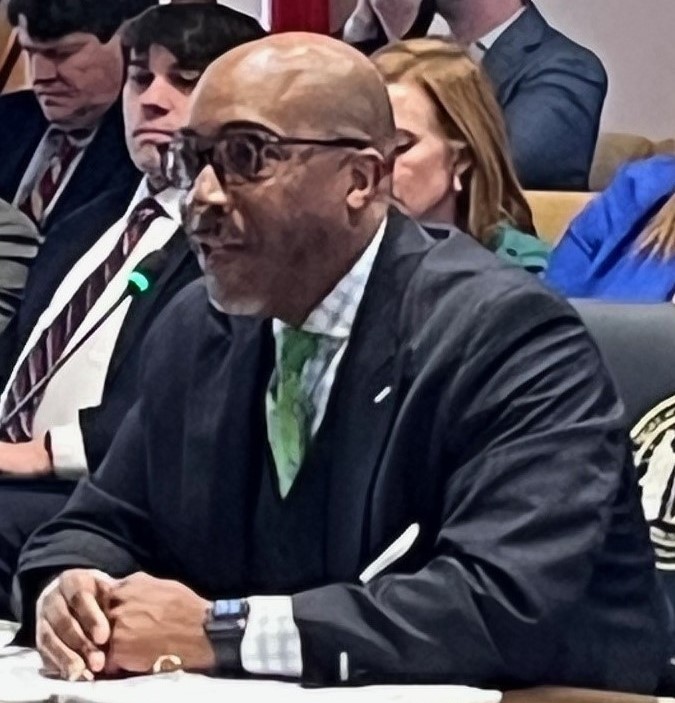
The House Oversight Committee kicked off a comprehensive agenda of basic questions for state agencies on February 27.
Up first were the Department of Revenue Secretary-designee McKinley Wooten, Jr., and State Budget Director Kristin Walker in the morning hearing, and Division of Motor Vehicles Commissioner Wayne Goodwin and Department of Transportation Secretary Joey Hopkins in the afternoon.
DOR: Measuring customer service in speed
Department of Revenue Secretary-designee McKinley Wooten said the agency aims to deliver refunds as quickly as possible. Co-Chair Brenden Jones (R-Columbus) emphasized that that also meant collecting taxes with minimal inconvenience. Wooten touted the department’s customer service and said it measures satisfaction through customer surveys.
Upon questioning from Rep. Brian Echevarria (R-Cabarrus), Wooten distanced DOR under his administration from its strategic plan for the 2023-25 biennium. “That was the strategic plan from the last administration that we will update for this new that we have not done yet,” Wooten said, adding that “it was DEI practices that were encouraged, and there was not a DEI program that was created in the department.” He also pointed out that the agency does not use diversity, equity, and inclusion (DEI) standards in hiring and does not require DEI training.
OSBM: Accountability for agency spending and outcomes
State Budget Director Kristin Walker said OSBM’s primary task is to maintain a balanced budget for state government. She spoke in broad terms about how the office accomplishes this task.
On the accountability front, every agency either uses OSBM internal auditors or OSBM training for its own internal auditors. Beyond that is a “coalition of the willing” who seek program evaluations through OSBM. For itself, OSBM has an internal dashboard for individual performance.
Walker reported that OSBM has complied with “mandatory” Office of State Human Resources DEI trainings and aims to hire the best and brightest for all positions.
DMV: Preparing for new leadership
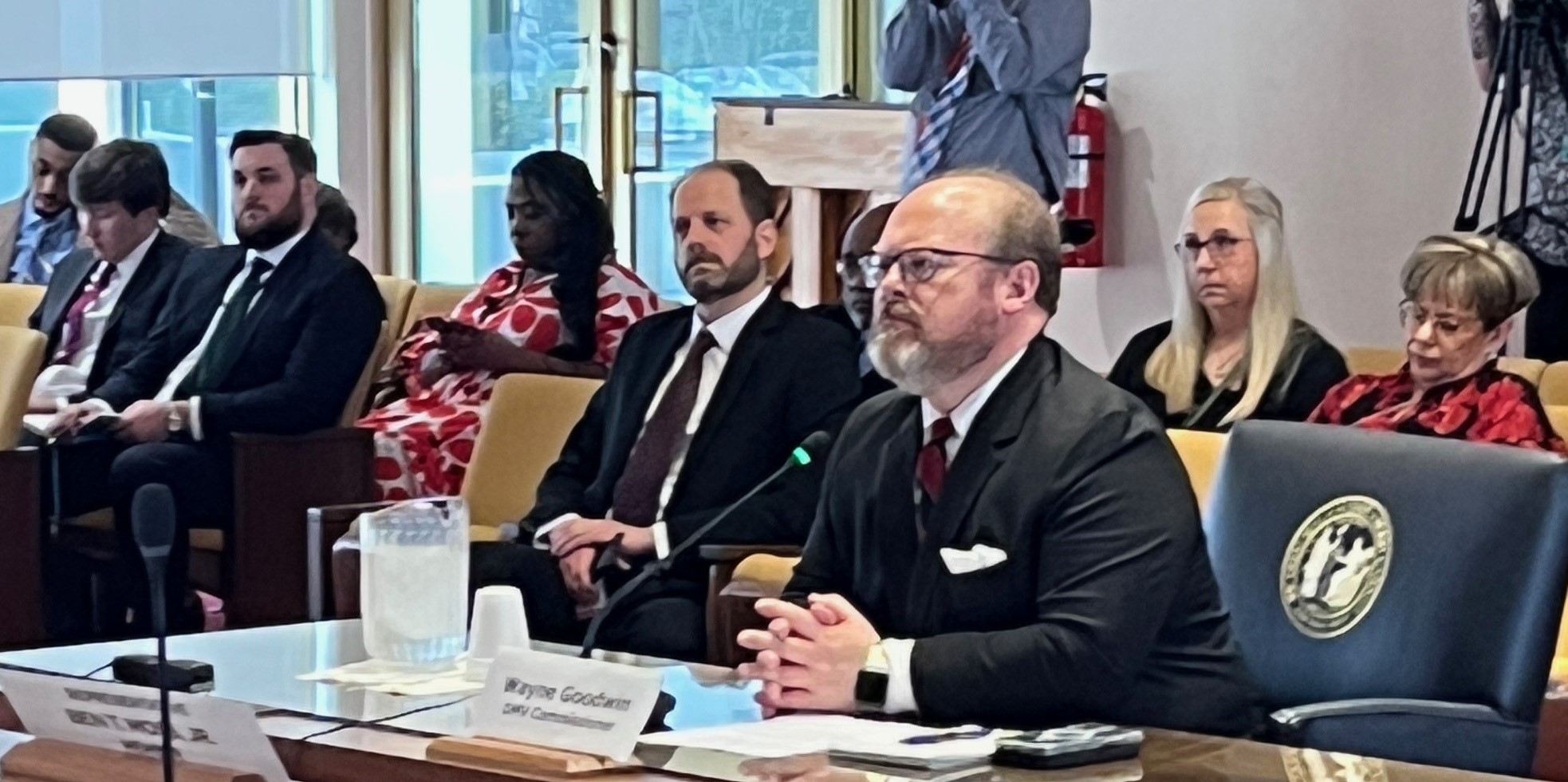
A day after he announced he would not try to keep his job, DMV Commissioner Wayne Goodwin faced another round of grilling over issues that have plagued his tenure—questionable decisions on operating practices, wait-time measures, contracting, and legislative requests. To the frustration of more than one member, Goodwin reiterated his desire for DMV to be as efficient as the Transportation Safety Administration (TSA).
Rep. Grant Campbell (R-Cabarrus) asked if the problem at DMV was about work culture. Though Goodwin addressed leadership in his response and stated a reluctance to “disparage” staff, he did not seem to view work culture as a reflection of agency leadership.
Channeling the frustration of other legislators and many other people across North Carolina, Co-Chair Jake Johnson (R-Polk) suggested moving DMV from the Department of Transportation. “The reality is it’s not getting better,” he said. “We’ve got a stack of archived emails that … folks are not happy. I think it’s time we look at some drastic changes.”
DOT: Helene and measures
After the fireworks of DMV, Hopkins and committee members spoke mostly about the damage from Helene and DOT’s work to get western North Carolina moving again. Among the highlights was the reopening of I-40 to Tennessee, at reduced capacity and speeds.
Hopkins listed statistical measures and methods the agency uses to gauge public opinion of DOT’s work.
Up Next
The House Oversight Committee will continue to ask state agencies about their key results for North Carolina in its next hearing, Thursday, March 13.

Article One, Section 35, of the North Carolina constitution states, “A frequent recurrence to fundamental principles is absolutely necessary to preserve the blessings of liberty.” That is precisely what the House Oversight Committee aims to do by asking the fundamental purpose of each state agency and how it fulfills that purpose.
How can the General Assembly, as the board of directors for each state agency, set a direction for the agency and measure the agency’s performance?
The simple answer is “oversight.” The House Oversight Committee will seek more specific answers in these hearings.
The committee exists to ensure agencies are doing the right things the right way; that they are being effective and efficient. This is a nearly impossible task for government. State agencies do not have profits and losses to help guide their decisions. By law, they are mandated to supply their services, and, in some cases, the citizen is mandated to use their services, often without an alternative. While the price an agency pays for a good or service may be set in a more-or-less competitive process, the price it charges to users of its service is set by the legislature.
With prices, profits, and losses, agencies would know whether people liked the services and goods available and if the processes to provide those services and goods were efficient enough to continue as a concern in the future. Lost customers, departing workers, or lower profits would likely prompt a re-evaluation of government’s efforts. Without those, the legislature and state agencies need to specify the societal goal desired, then decide what tasks government can and ought to undertake to achieve that goal, how to go about those tasks, and measure whether those tasks really are contributing to the goal as expected. If the goal is not being achieved, the agency and legislature need to evaluate whether the problem was a poorly defined goal, choosing the wrong task to achieve the goal, or doing the task the wrong way.
The committee intends to call each agency secretary and director and ask them three questions:
- What is better about North Carolina if the agency does its job well?
- What measure does the agency use to know if it is successful?
- What programs and activities help the agency achieve its core outcome?
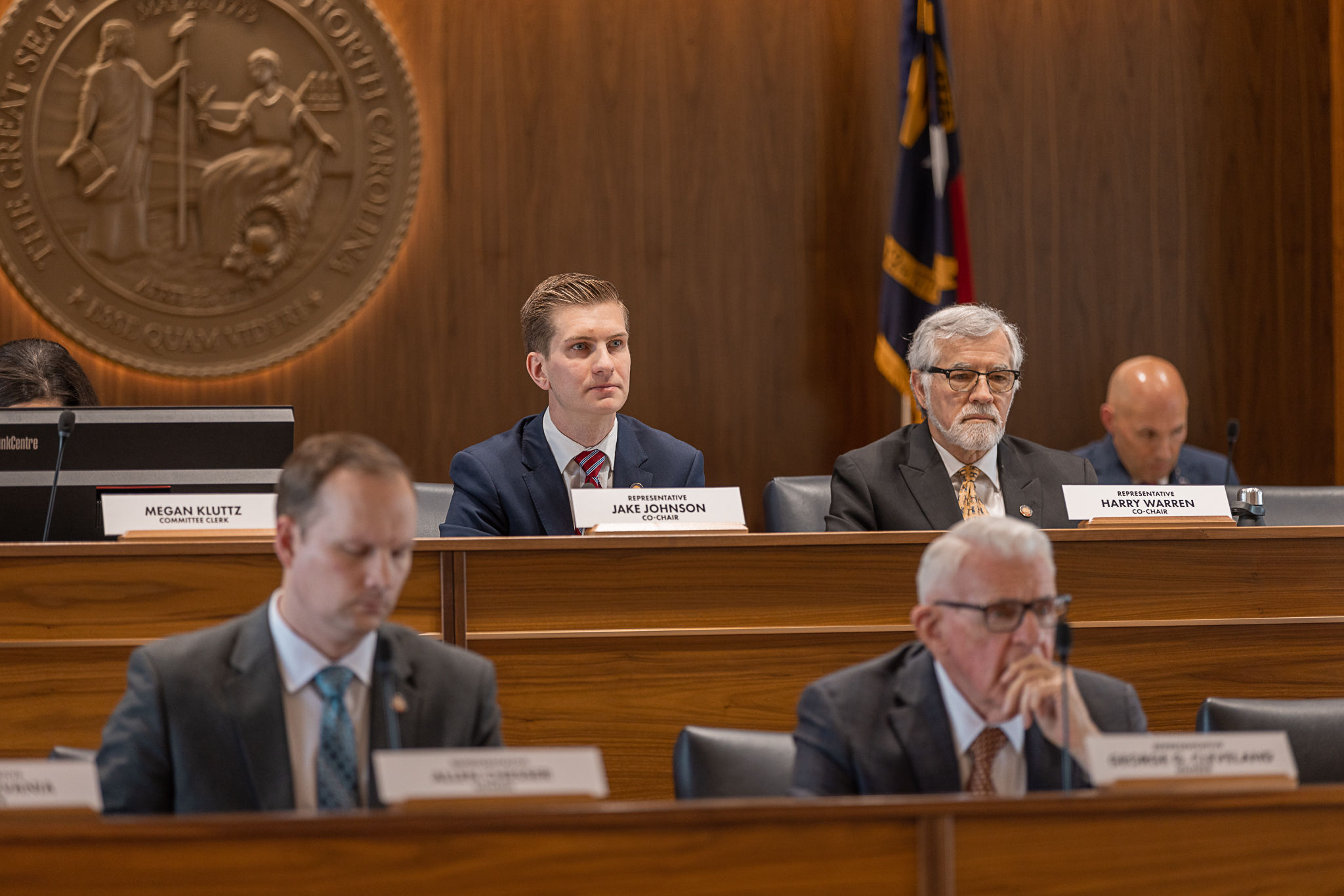
The House Oversight Committee will continue its series of hearings asking fundamental questions of agency secretaries and directors March 13 at 9 a.m.
The committee will hear first from Department of Information Technology Secretary-designee Teena Piccione, Office of State Human Resources Director Staci Meyer, and Department of Administration Secretary-designee Gabriel Esparza.
State Controller Nels Roseland, rescheduled from February 26, will testify in the afternoon.
“We learned a lot during our first Oversight hearing. As we drill down to the one primary mission of each agency, we want to hear how that makes a difference for our citizens,” Co-Chair Jake Johnson (R-Polk) said.
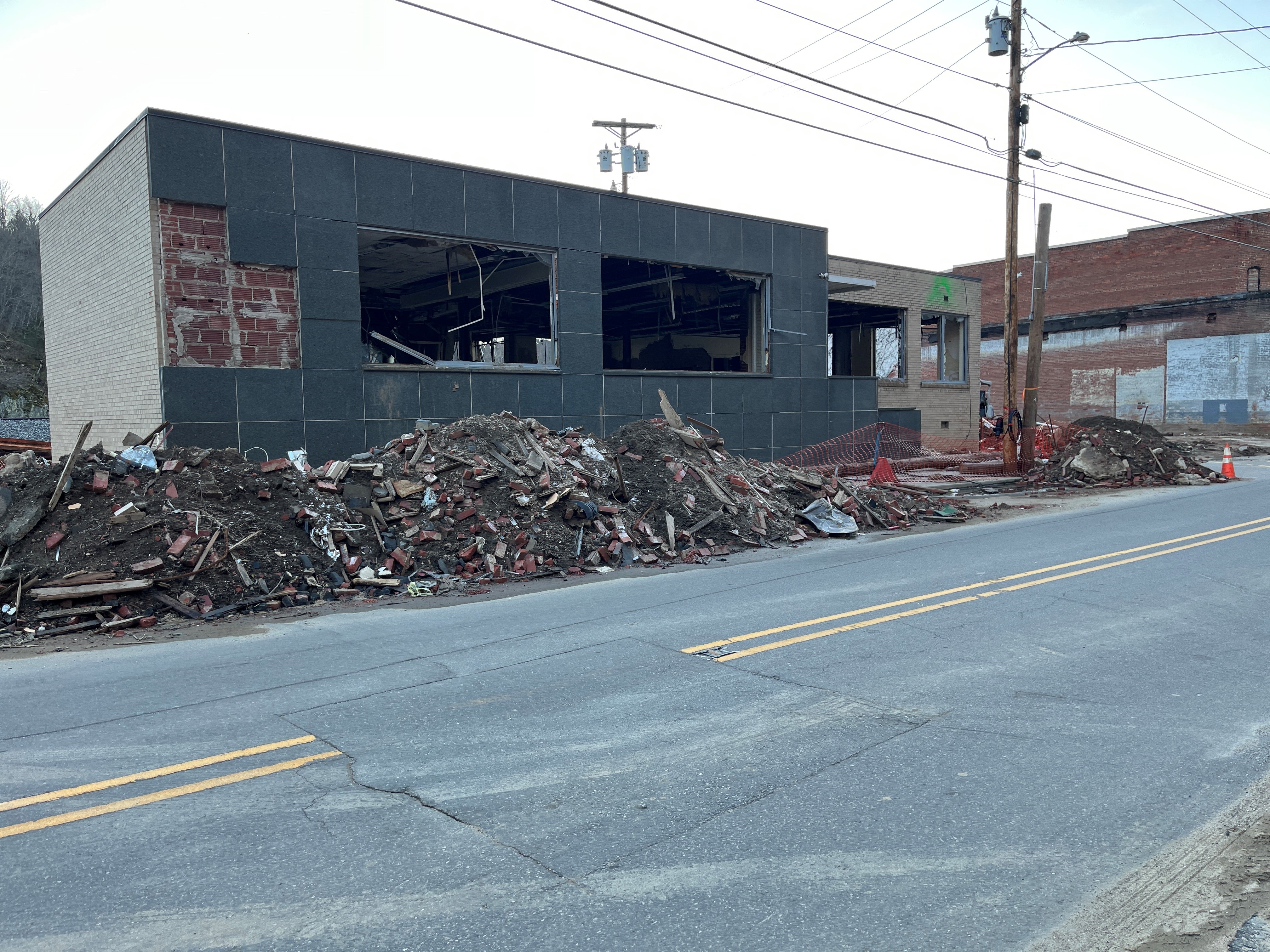
Members of the Joint Legislative Commission on Governmental Operations Subcommittee on Hurricane Response and Recovery will resume questioning Department of Commerce Deputy Secretary Stephanie McGarrah of the Division of Community Revitalization and Governor Stein’s Recovery Advisor Jonathan Krebs on Hurricane Helene recovery in a hearing Thursday, March 6 at 9 a.m.
This will be a follow-up hearing from January when McGarrah and Krebs had their testimony cut short due to time constraints. They will be expected to provide further details on what they have learned from the failings of the North Carolina Office of Recovery and Resiliency and outline GROW NC’s plans for Helene recovery.
“We have to make sure that the new agency in charge of Helene recovery does not repeat the mistakes of its predecessor. We want to set the GROW NC staff up for success from the get-go. We want to work together, but we want them to know that we’re paying attention.” said Co-Chair Rep. Brenden Jones (R-Columbus). “To those in Western North Carolina who have lost homes, businesses, or loved ones, we haven’t forgotten you, and we want the area to come back even better and stronger than before Helene.”
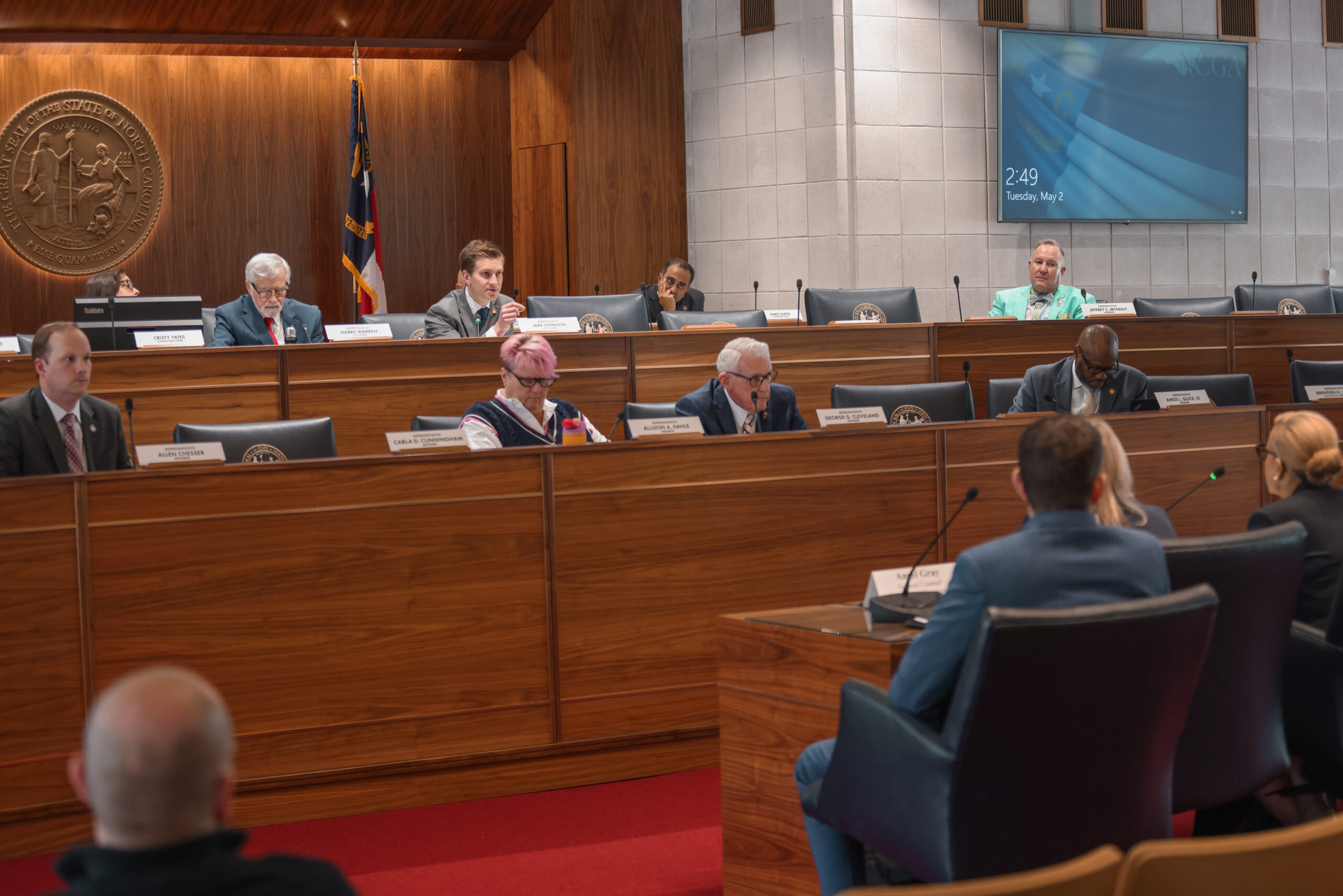
With a new gubernatorial administration comes the opportunity to take a fresh look at state agencies, why they exist, and what they do. Over the coming months, the House Oversight Committee will call on agency secretaries and directors to answer the question: “Does the agency make life in North Carolina better?”
The committee will hold a set of hearings in its February 27 meeting. At 10:30 a.m., Secretary-designee of Revenue McKinley Wooten, Jr., State Controller Nels Roseland, State Budget Director Kristin Walker, and Treasurer Brad Briner will explain what their agencies do and how they can help with accountability measures for others.
Department of Transportation Secretary Joey Hopkins and DMV Commissioner Wayne Goodwin will begin their testimony at 1:00 p.m.
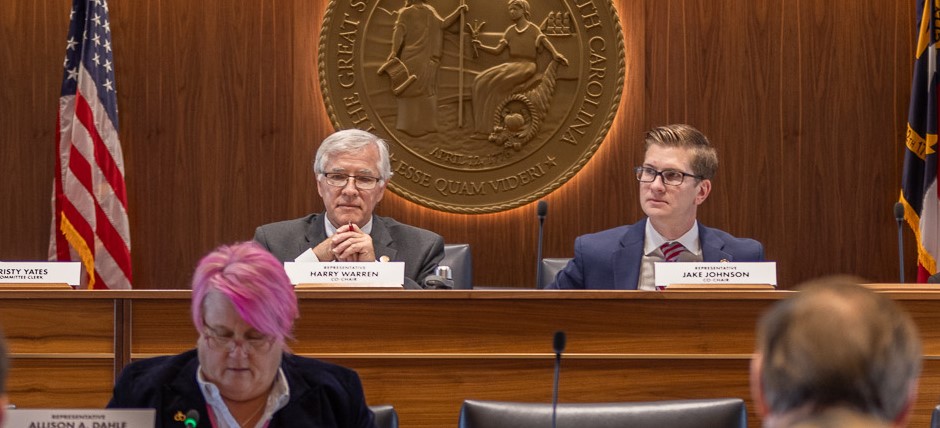
“Government efficiency starts with defining the job of government in practical terms,” Co-Chair Brenden Jones (R-Columbus) said.
Co-Chair Jake Johnson (R-Polk) added, “It’s a fair question to ask every agency: How do we know our spending on an agency has any impact, good or bad, on the people of North Carolina?”
“Government should exist for the people,” Co-Chair Harry Warren (R-Rowan) said. “Our committee members want to assess where things stand and what can be accomplished.”
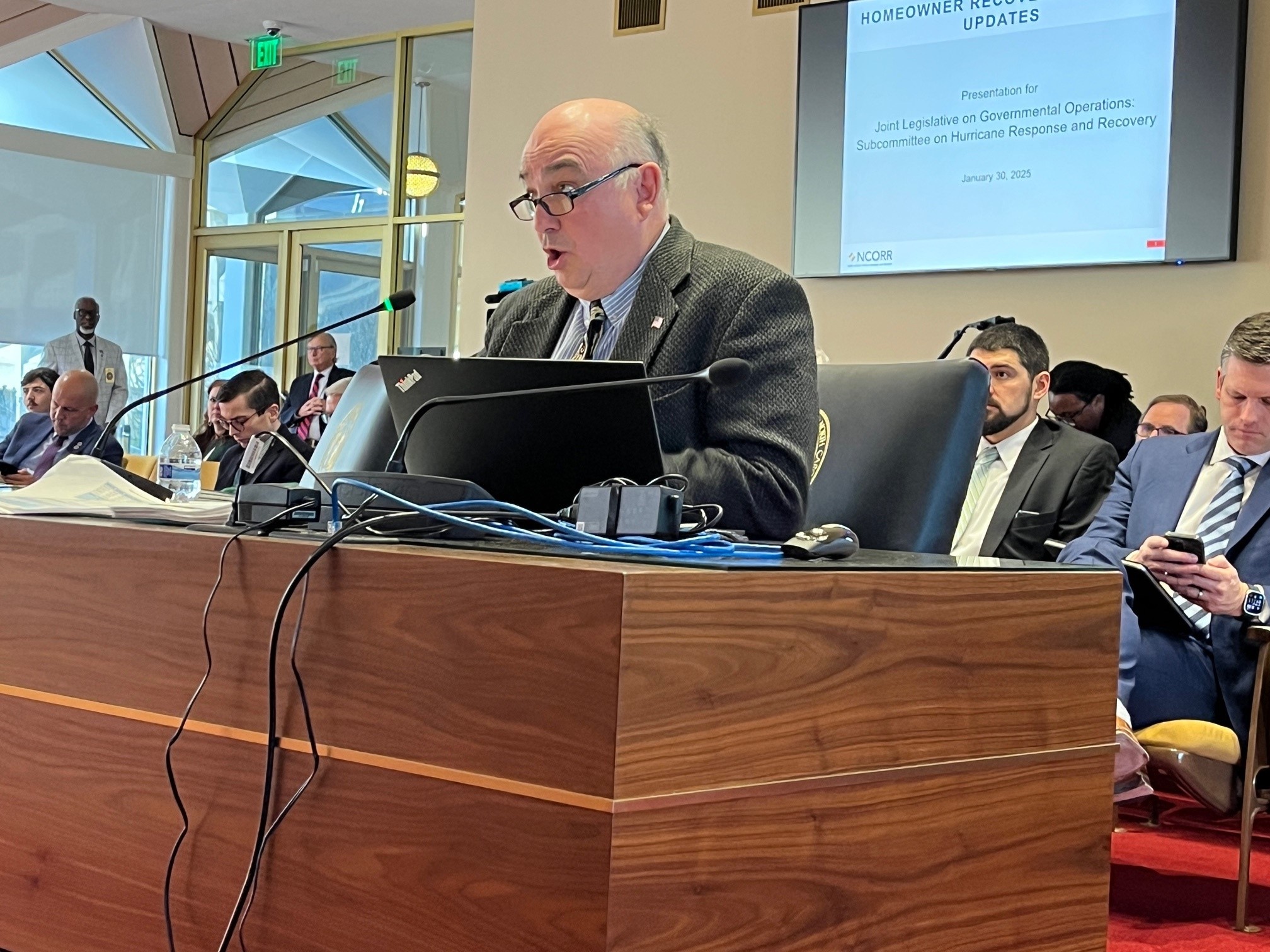
The North Carolina Office of Recovery and Resiliency (NCORR) expects it will take $220 million in additional state funds to complete work by the end of 2025 on 1,150 homes damaged by hurricanes Matthew and Florence. Another 39 homes might not be completed due to “atypical” circumstances.
NCORR Director Pryor Gibson testified before the Joint Commission on Governmental Operations Subcommittee on Hurricane Response and Recovery for nearly two and a half hours on January 30. Jonathan Krebs, advisor to Gov. Josh Stein on western North Carolina recovery, and Stephanie McGarrah, deputy secretary in the Division of Community Revitalization at the Department of Commerce, followed Gibson. They have been invited back before the committee to provide more details March 6.
The Subcommittee held its first hearing with NCORR in September 2022 when the agency was completing fewer than 10 homes per month. The federal government provided nearly $1 billion in three grants for NCORR to assist with the Eastern North Carolina storms. In October 2024, however, Gibson alerted legislators that NCORR had overcommitted funds by $175 million and would need state money to complete its work.
A more thorough accounting by the Office of State Budget and Management before the November 18, 2024, hearing showed NCORR had unmet needs of $320 million, which Gibson circuitously confirmed at the time. Legislators appropriated $30 million in November and another $50 million in December to get NCORR into February. Gibson said contractors may abandon the program without a firm commitment from the General Assembly before the end of February.
Co-chair Rep. Brenden Jones (R-Columbus) set an expectation for clear answers at the beginning of the hearing.
“No more excuses, no more delays, no more vague estimates, no more NCORR kicking the can down the road,” Rep. Jones said. “Today, as we go through this, we’re going to ask you how much money is actually needed to finish the operation. I’m going to ask you why we should believe you.”
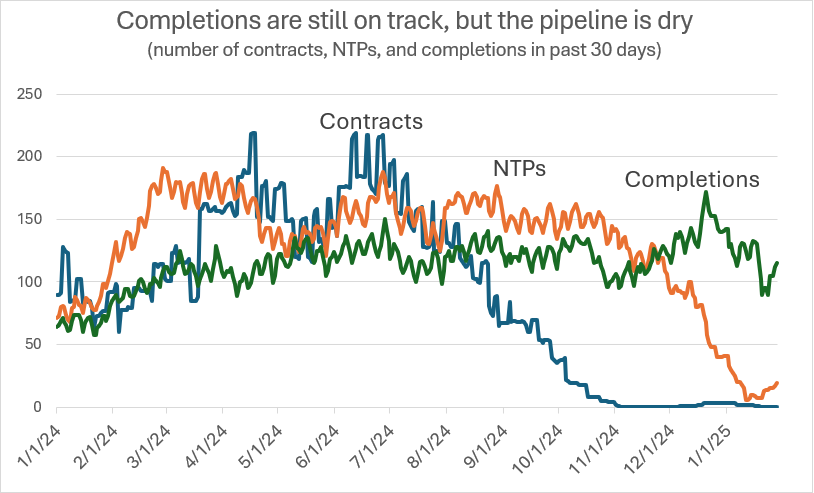
Inconsistencies in the Gibson’s presentation over the number of employees, specific costs, and NCORR’s communication to general contractors further eroded subcommittee members’ trust and increased their frustration.
NCORR completed 143 homes in December and its latest report to Gov Ops staff showed 116 homes completed in the 30 days through January 29. In contrast, NCORR only issued 19 notices to proceed (NTPs) in that time and had not issued a contract since December 19 (see graph).
NCInnovation provided its 2024 audit to General Assembly on November 21. You can find the audit here and an Excel spreadsheet of the financials here. Of note in the cover letter from independent auditor BDO is the acknowledgement that NCInnovation did not have an independent audit before receiving its first $250 million in state funds:
The 2023 financial statements of the Organization were reviewed by other auditors, whose report dated January 10, 2024[,] stated that they were not aware of any material modifications that should be made to those statements for them to be in accordance with accounting principles generally accepted in the United States of America. A review is substantially less in scope than an audit and does not provide a basis for the expression of an opinion on the financial statements as a whole. [emphasis added]
NC Gen. Stat. 143-728(d)(9) requires NCI to “maintain separate accounting records for and separate accounts [for State and private funds] and shall not commingle [the two],” but the audited financial statements do not make clear the separation of public and private funds. Despite this, it appears that grants are the only thing currently being paid from state funds. This is the largest expense for NCI as projects in the pilot round of grants qualify for their second tranche of funding and as NCI completes its first statewide round of grantmaking in early 2025. The Request for Proposals page states, “The deadline for the fall 2024 pre-application is Friday, December 13, 2024. Applicants can anticipate hearing a response from NCI within one to two months from the application deadline.”
The second largest expense for NCI is salaries and benefits, totaling $2.6 million for the fiscal year. Because the regional hub personnel did not start until November, the annualized expense is more than $3.0 million.
NCInnovation FY2024 Audited Financial Statements and Report [PDF]
Annotated NCInnovation FY2024 Audited Financial Statements [Excel]
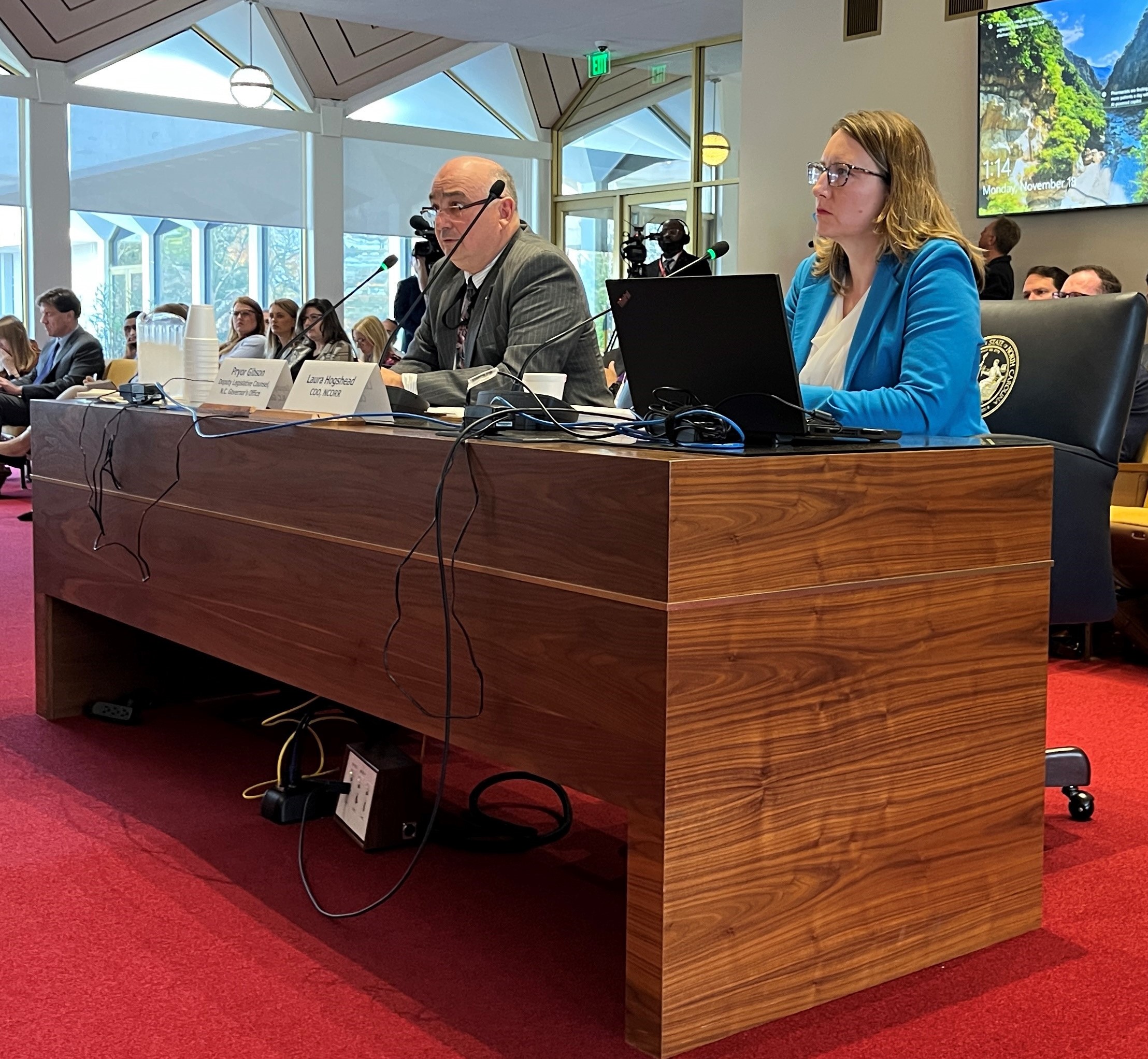
Leadership of the North Carolina Office of Recovery and Resiliency (NCORR) gave incomplete responses to pointed questions from members of the Joint Legislative Commission on Governmental Operations Subcommittee on Hurricane Response and Recovery during the November 18 hearing.
On the agency’s funding need, which her presentation and press reports inaccurately pegged at $221 million, (now former) NCORR Director Laura Hogshead said, “Worst case scenario is the $264 million number… if there’s no attrition or not able to use any other sources of funding.” But that figure did not include any contingency for higher construction costs for any of the roughly 1,400 homes still to be completed. From a spreadsheet NCORR provided to the subcommittee, building in a contingency would bring the remaining unmet need to $289 million, on top of $30 million appropriated by the General Assembly in October.
Governor Roy Cooper’s Deputy Legislative Counsel Pryor Gibson, who appeared before the subcommittee with Hogshead, first told legislative leadership about NCORR’s $289 million need on October 21, two days before the chambers were to vote on assistance to the western counties devastated by Hurricane Helene.
By 2021, NCORR budgeted $534 million of $982 million in federal funds for hurricanes Matthew and Florence to repair and rebuild homes in its Homeowner Recovery Program (HRP.) Since then, NCORR has transferred $148 million in additional funds from other purposes in that federal pot to bring the total for repairs and reconstruction to $683 million. The latest estimate for HRP is $980 million, which leaves, along with NCORR’s other spending on Matthew and Florence, a deficit of $319 million.
Hogshead acknowledged to Rep. Brenden Jones (R-Columbus, Robeson) that she did not raise flags as the program took on more than it could cover because, while staff were monitoring individual line items, no one was monitoring at the overall budget. Although she took the blame for it, Hogshead refused to resign.
While NCORR’s financial problems prompted the hearing, much of the time was spent looking back at the agency’s other problems and looking ahead to potential responses to Hurricane Helene. Gibson promised better financial reporting to the legislature, and members remained skeptical about providing more money to NCORR. Rep. Jones closed with a touching personal note about the people he and other members see every day who are counting on state government to fulfill its promises without delay.
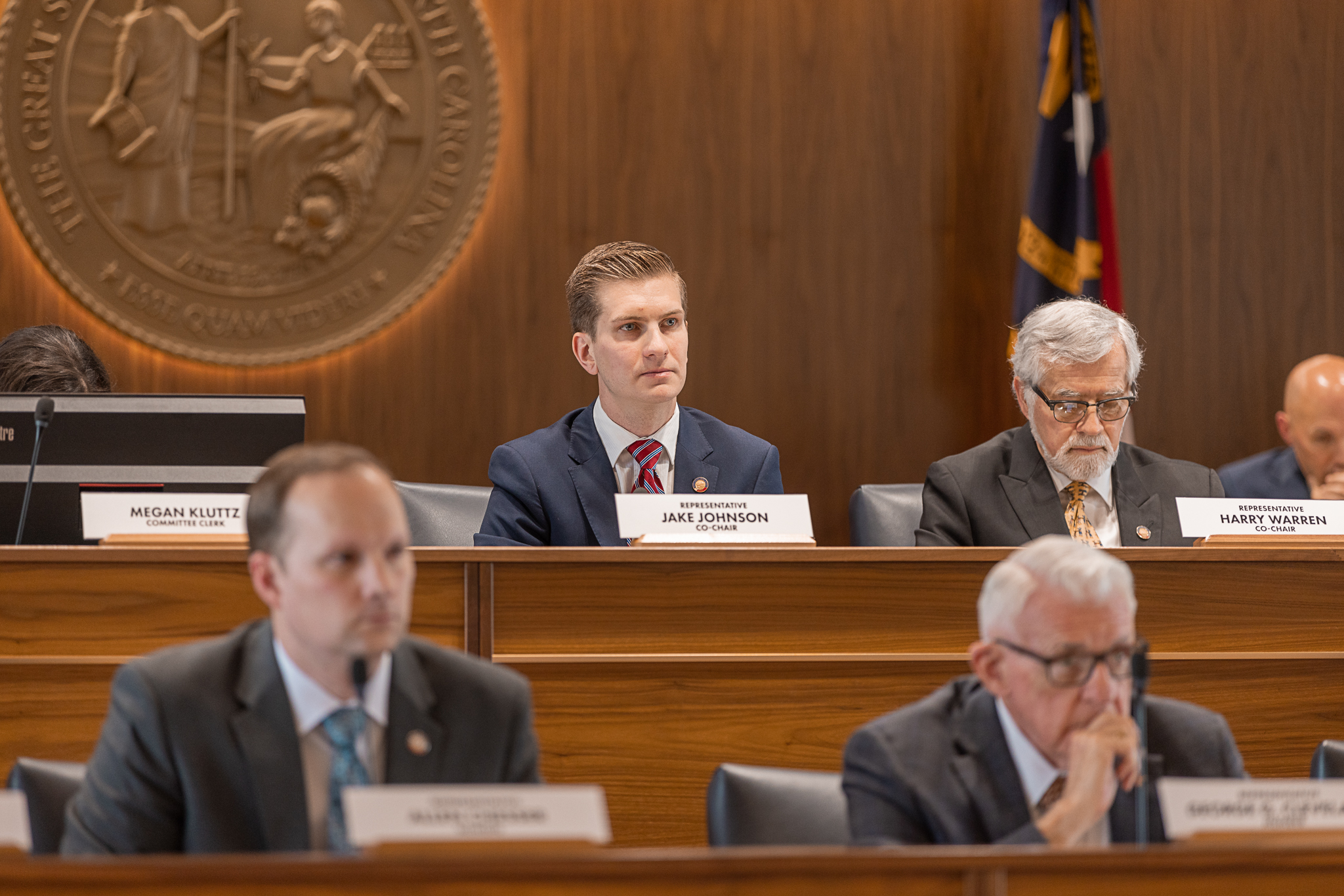
House Oversight and Reform Co-chair Jake Johnson’s op-ed on the State Board of Elections party-line vote against the Justice For All Party ran in the Raleigh News & Observer, Charlotte Observer, and Durham Herald-Sun on July 31, 2024. A federal judge later ruled in favor of the Justice For All Party and the State Board of Elections then voted unanimously to allow Cornell West to appear on the November ballot.
Rep. Johnson explained how members misused the unrepresentative results of a non-random survey to justify their party-line vote.
“The board’s decision on the Justice for All party also was a methodological mess. First, Board staff pulled a random sample of 250 people from this non-random and potentially skewed population for follow-up phone calls, according to board staff. Such a random sample can be unrepresentative, however, and staff did not take any steps to ensure its sample reflected the larger population of those who provided phone numbers, let alone the entire population of petition signers. Although the State Board of Elections has a statistician on staff, that person was not consulted about the validity of this survey methodology.
“Biased sample in hand, staff made one call to each phone number on the list from State Board of Elections phone numbers during business hours between July 9 and 11. Only 49 of the 250 people responded. Again, staff did not consider how those 49 people differed from the 201 people who did not answer or the 5,040 not in the sample or the 11,951 who provided no phone number at all.
“Despite this, board chairman Alan Hirsch and board member Jeff Carmon both said the survey of 49 people was key to their votes against the Justice for All Party.”
Read the whole op-ed: